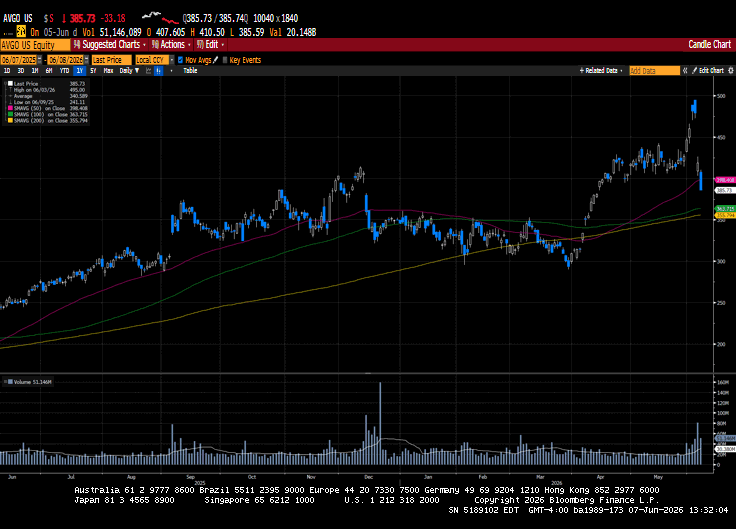
The S&P 500 was unable to make it a 10th straight week of gains as the market pulled back sharply late in the week amid a sense that the AI trade may have gone too far, too fast. Technology issues were absolutely hammered on Thursday and Friday after...
As the Medicare Annual Enrollment Period approaches, many beneficiaries assume their current plan will remain the best option for the coming year. Unfortunately, Medicare plans, provider networks, prescription drug formularies, and costs can change annually. Taking...
By Sarah Brenner, JD Director of Retirement Education Question: Hello, Last December 15, I withdrew $10,000 from my traditional IRA. Thirty days later, I deposited $4,000 in a Roth IRA and $6,000 in a different traditional IRA. Can I treat the $4,000 Roth IRA...
For many Americans, retirement planning begins with one simple question: “How much money do I need to retire?” While building savings is important, a more critical question is often overlooked: “How will I create a reliable income throughout...
By Ian Berger, JD IRA Analyst Some of you may have come across the term “modified adjusted gross income” (MAGI) and figured it has something to do with “adjusted gross income” (AGI). But, unless you’re a tax geek, that may be all you know. That’s a shame...
Note that the example above uses jQuery to trigger the function call, but you could trigger the function call using any method you wish.fbq('track', 'Lead'); - To track the lead event on the page. Like Thank you page after submitting the lead.
If you have the Thank you page after submitting the lead then you can paste this code on the page and it'll track it as a successful lead.
If instead you wanted to track a standard purchase event when the visitor clicks a purchase button, you could tie the fbq('track') function call to the lead button on your page, like this: